
Unlocking the Mind: A Guide to Access Bars
Discover how the therapy helps the mind
Ilaria Bucchieri
3/3/20263 min read
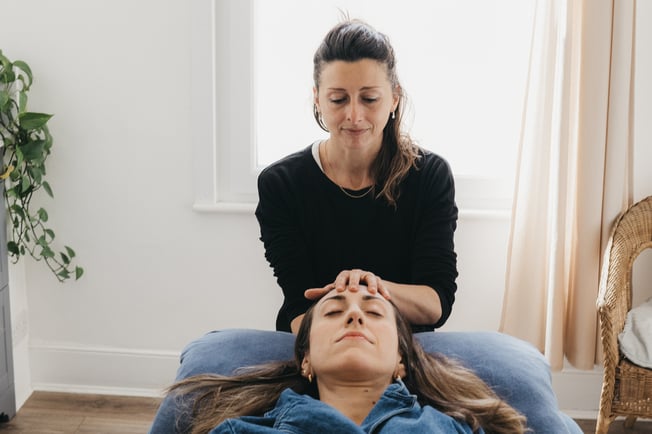
In a world that rarely hits the "mute" button, many people are looking for ways to clear the mental clutter. Access Bars is a gentle, non-invasive energy therapy that can help to do just that—functioning like a « re set » button for your brain's overloaded hard drive.
Developed by Gary Douglas in the early 1990s, this modality has grown into a global phenomenon practiced in over 170 countries.
What is it?
How does it work?
What might you expect from a session?
Let’s start from explaining what the « BARS » are. These refer to 32 unique points on the head that correlate to different aspects of life, such as:
Healing
Body
Control
Awareness
Creativity
Power
Aging
Money
Communication
Relationships
According to the philosophy of Access Consciousness, these points store the electromagnetic component of all the thoughts, ideas, attitudes, decisions, and beliefs you have ever had about anything.
How Does a Session Work?
A typical Access Bars session lasts between 60 to 90 minutes. Unlike a traditional massage, you remain fully clothed and lie down comfortably.
A practitioner lightly touches the 32 points on your head in specific sequences.
This light touch stimulates a "discharge" of the energy holding these limiting beliefs in place. It’s a bit like neutralizing the polarity in a circuit.
Most people report a sense of deep relaxation. Some fall asleep, while others experience physical sensations like tingling, warmth, or a "fluttering" in the body.
Recipients frequently report the following benefits:
Reduced Mental Chatter: a quieter mind and better focus.
Lower Stress Levels: Significant reduction in anxiety and the "fight or flight" response.
Improved Sleep: Many find they fall asleep faster and feel more rested.
Emotional Relief: help in dissipating the intensity of anger, frustration, or sadness.
Physical Ease: a general sense of lightness in the body.
Is it for You?
Access Bars is often used as a complementary tool alongside traditional therapy or medical treatments. It requires no specific "belief" in the system to work—it is designed to be a passive process where you simply receive.
Whether you are looking to break through a creative block, manage a high-stress career, or simply want an hour of profound peace, it offers a unique approach to mental and emotional wellness.
Access bars and ADHD
When it comes to ADHD (Attention-Deficit/Hyperactivity Disorder), Access Bars is often discussed as a "brain hack" for managing the high-speed mental traffic that defines the neurodivergent experience.
Because ADHD is characterized by executive dysfunction and a racing mind, Access Bars can act as a much-needed cooling system for an "overheated" brain.
For those with ADHD, the world can feel like a browser with 50 tabs open at once. »Running the bars" can help by:
Quieting "Mind Chatter": The primary goal is to slow down brain waves. Many users with ADHD report that the constant background noise of competing thoughts significantly quiets down after a session.
Regulating the Nervous System: ADHD is often accompanied by a state of "hyper-arousal" or chronic stress. Research by Dr. Terrie Hope and others has indicated that Access Bars can shift the body into a parasympathetic state (rest and digest), which may help reduce the physical restlessness associated with hyperactivity.
Reducing Overwhelm: By "defragmenting" the mental storage of beliefs and stressors, it becomes easier to prioritize tasks and manage the emotional dysregulation that often comes with ADHD.
In 2015, Dr. Terrie Hope (PhD, DNM, CFMW) and Dr. Jeffrey Fannin (a leading neuroscientist) researched the effects of Access Bars on 60 participant. The study showed that after a 90-minute session, 85% to 89% of participants experienced an increase in brain wave coherence, indicating greater connectivity between brain regions and optimal functioning.
The research indicated that Access Bars helps move brain wave patterns from high-stress states (beta) to more relaxed states (theta or delta), similar to the results of advanced meditation.
Their findings suggest that the technique can reduce stress, improve sleep, and enhance mental clarity.
(Dr. Hope’s research on Access Bars was published in the Journal of Energy Psychology: Theory, Research, and Treatment in November 2017. )
While these results are promising for relaxation and anxiety reduction, Access Bars is not a medically recognized treatment for ADHD. Most large-scale medical organizations view it as a complementary or "wellness" practice rather than a clinical intervention at this stage.
Access Bars for Children with ADHD
Many parents turn to Access Bars because it is non-invasive and requires the child to do nothing but lie still. Reports from the Access community suggest that children with ADHD often:
Find it easier to focus on schoolwork or tests.
Experience fewer emotional "meltdowns" or outbursts.
Have an easier time falling asleep at night.
An important note: If you or a loved one are using medication for ADHD, it's generally recommended to view Access Bars as a "support tool" rather than a replacement.